
English| USD
Suggested for you
More currencies
Choose a language
Réunion's active volcano is one of the few on Earth you can walk into without a permit or a fee. The route from Pas de Bellecombe drops into a caldera and climbs back out again, and the mountain decides daily whether that is possible. This piton de la fournaise trail guide sets out what shapes the day.
Quick answer
Access to the piton de la fournaise trail is free: entry costs 0 EUR and the gate at Pas de Bellecombe, Sainte-Rose 97439 is open 00:00–23:59 every day of the week. Two conditions override that. Volcanic alert levels close the route without notice, and cloud or rain can make the caldera floor unnavigable by late morning.
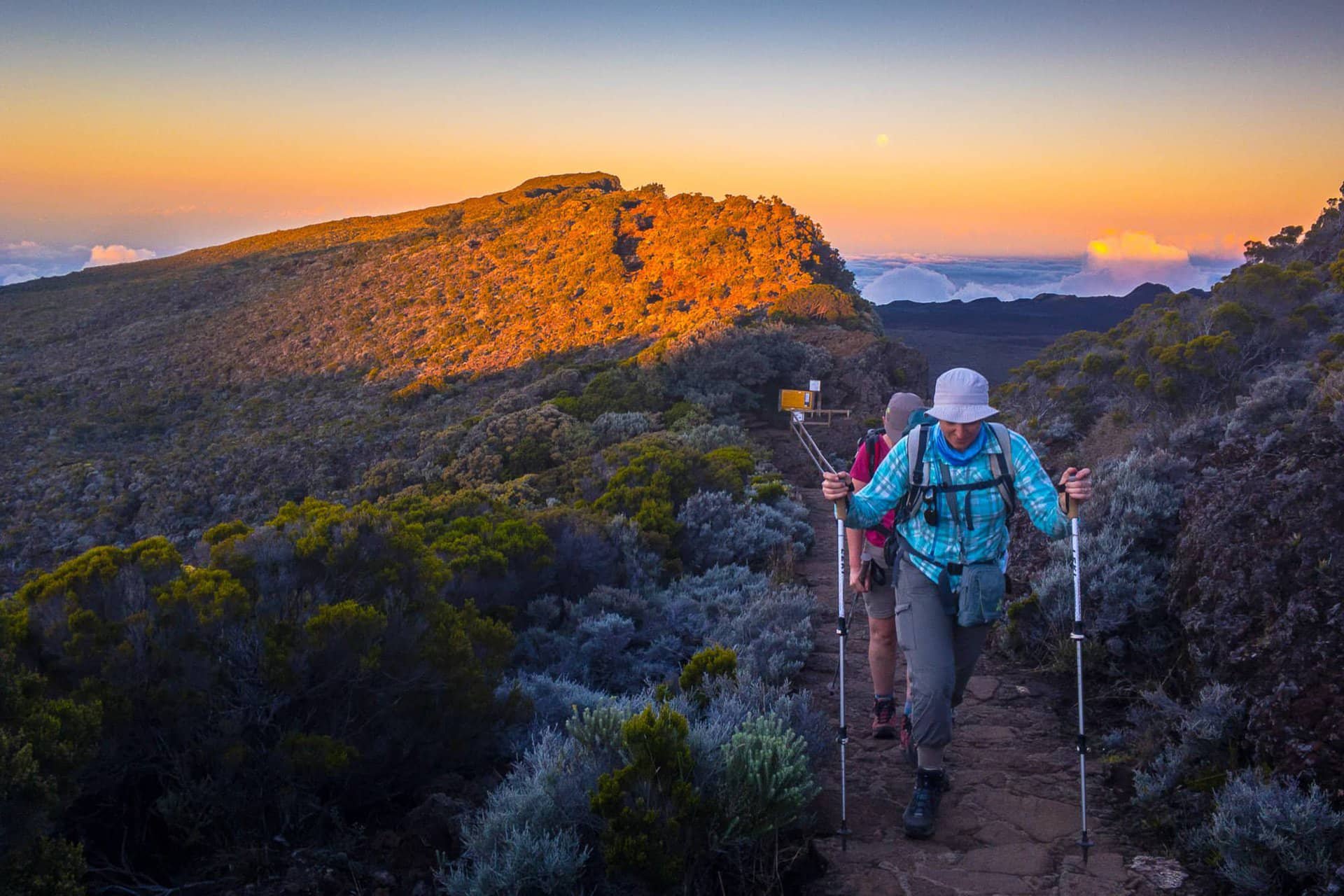
The volcano has erupted more than 180 times since the seventeenth century, which makes Piton de la Fournaise one of the most reliably active shield volcanoes on the planet — and the reason the walk exists at all. Lava has repeatedly resurfaced the Enclos Fouqué, the horseshoe-shaped caldera that the path crosses, so the ground underfoot is often younger than the hiker standing on it. The Observatoire Volcanologique du Piton de la Fournaise monitors the edifice continuously from Bourg-Murat, and its readings, relayed through the Préfecture, are what ultimately decide whether the belvedere gate is open or shut. What a walker actually faces is a descent and a climb, not a summit assault. From the Pas de Bellecombe belvedere a metal staircase drops roughly 160 metres to the caldera floor. From there, paint marks — the white splashes locals call *les taches blanches* — guide the crossing east toward Formica Leo, the small cinder cone that sits alone on the plain, then on toward Chapelle de Rosemont and the final ascent of the Dolomieu crater rim. The surface alternates between loose scoria, ropey pāhoehoe, and sharp ʻaʻā that punishes thin soles. There is no shade, no water, and no phone coverage across long stretches. Round trip to the rim and back typically occupies most of a day, which is why the piton de la fournaise trail is treated by the Parc national de La Réunion as a full mountain outing rather than a scenic stroll. The practical consequence is that the timetable belongs to the weather, not to the visitor. Trade winds push cloud up the eastern flank through the morning, and once the caldera fills, the paint marks vanish and orientation becomes guesswork. Walkers who turn back at that point are following standard practice, not conceding defeat. Use the answer this way: check the alert level published by the Préfecture the night before, confirm the belvedere gate status, and build a personal turnaround time before setting off rather than negotiating with yourself at Formica Leo. A closed volcano is not a wasted trip — the Plaine des Sables crossing, the Route du Volcan, and the viewpoints along the rim reward the drive on their own. Anyone planning a Réunion volcano hike should treat the piton de la fournaise trail as a plan A with a written plan B attached.
“The timetable belongs to the weather, not to the visitor.”
The best arrival window for the Piton de la Fournaise trail is between 06:00–08:00 to ensure clear visibility and avoid the heat. Arriving early is essential to minimize exposure to intense solar radiation and afternoon cloud cover common at high altitudes.
Cool, dry air with clear skies; 5–15°C
This period offers the most stable weather conditions for hiking the caldera. The lack of precipitation reduces the risk of slippery terrain.
Warmer with frequent afternoon rain; 10–20°C
Summer months bring higher temperatures and increased volcanic moisture. Hikers should anticipate rapid weather shifts during these months.
Stable conditions before afternoon clouds
Selecting a weekday morning provides the best opportunity to traverse the trail with fewer hikers. This timing avoids the heat buildup that occurs by midday.
Verdict: The optimal time to visit is on a weekday between 06:00–08:00, specifically during the drier months of May through October.
The Piton de la Fournaise trail is accessible to visitors throughout the entire week. Access remains open 24 hours a day to accommodate varying hiking schedules.
Access to the Piton de la Fournaise trail at Pas de Bellecombe is open to the public without a required entry fee. There are no ticket tiers or admission charges for visitors exploring this volcanic site.
Verdict: A typical adult pays 0 EUR, as there are no entrance fees required for hiking the trail.
Work through these steps in order, from the weeks before your climb down to the moment you step onto the crater floor at Pas de Bellecombe.
Everything you need to know about piton de la fournaise trail
The piton de la fournaise trail is considered challenging due to the uneven volcanic terrain and significant elevation changes. Hikers must be physically prepared for a long day on rocky, exposed ground.
There is no entrance fee for this attraction, as entry is 0 EUR. Access to the site remains free for all visitors at all times.
You should aim to arrive between 06:00–08:00 to avoid afternoon clouds and mid-day heat. Starting within this best arrival window ensures a safer and clearer experience on the mountain.
Yes, this volcanic site is accessible daily with opening hours from 00:00–23:59 throughout the week. You can plan your visit for any day that suits your schedule.
Ensure you carry sufficient water, sun protection, and sturdy hiking boots for your journey across the caldera. Preparing for rapidly changing weather conditions is essential for a safe traverse of this rugged landscape.
While active children may manage parts of the route, the full loop involves strenuous terrain that can be demanding for younger hikers. Always assess the weather and physical requirements of the circuit before departing with family.
Many visitors underestimate the intensity of the sun and the lack of shade on the exposed rock. Failing to follow the marked path or ignoring the recommended early start time often leads to exhaustion or navigation issues.