
English| USD
Suggested for you
More currencies
Choose a language
Réunion's active shield volcano sits inside a collapsed caldera reached by a single road across the Plaine des Sables. This page sets out what the route demands, what access costs, and the conditions that decide whether you see anything at all from the rim.
Quick answer
Piton de la Fournaise trekking is free: entry to the volcano and the national park trails costs 0 EUR, with no ticket required at any point. The trailhead at Pas de Bellecombe is open around the clock, every day. Access is suspended without notice during eruptions and alert phases, so the volcano's official status — not the calendar — governs whether you walk.
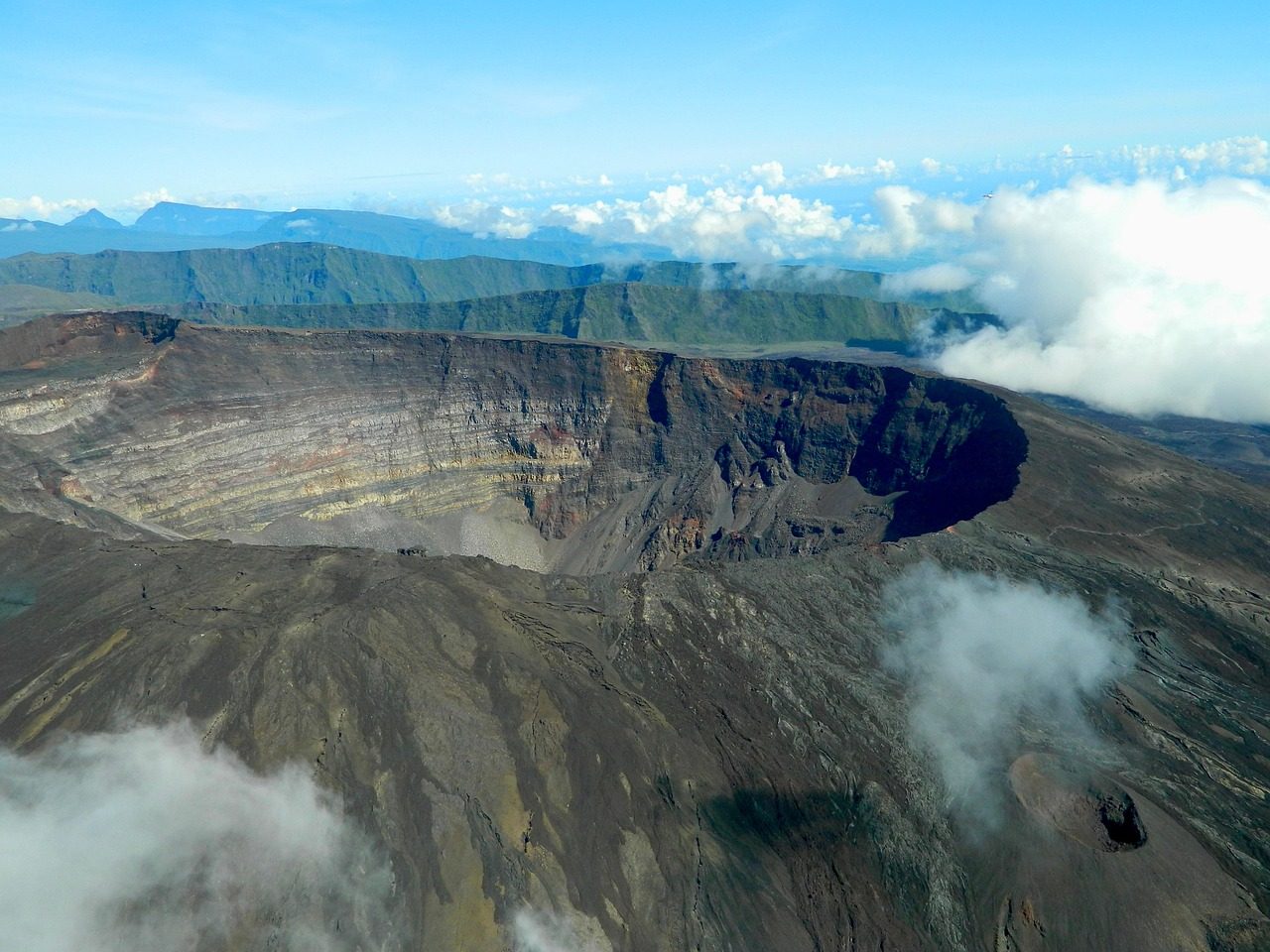
The volcano erupts roughly every nine months, which makes Piton de la Fournaise one of the most consistently active in the world and means the terrain underfoot is frequently younger than the guidebook describing it. Lava flows from the last decade have reshaped the Enclos Fouqué floor, buried older cairns and forced the Parc national de La Réunion to remark routes more than once. Trail descriptions age quickly here. What a walker actually faces is a caldera crossing, not a mountain ascent in the ordinary sense. From the belvédère at Pas de Bellecombe, a staircase drops through the caldera wall onto a floor of hardened pāhoehoe and clinkered ʻaʻā, where white paint marks replace any conventional path. The Formica Leo scoria cone appears early; beyond it, the Chapelle de Rosemont lava tube and then the long, exposed pull toward Dolomieu crater. Distances read short on a map and walk long in practice, because ropy lava is uneven and rewards slow feet. Volcano hiking in Réunion is measured in hours, not kilometres. Weather is the variable that decides everything. The caldera fills with cloud through the middle of the day, and the walk from the rim to the summit crater can be completed in total whiteout by anyone who left late. Cross-island driving from Saint-Denis, Saint-Pierre or Sainte-Rose is long, which is why the whole plan tends to be built backwards from a very early departure. The address — Pas de Bellecombe, Sainte-Rose, 97439 — matters less than the hour on the clock when you reach it. The other variable is the volcano itself. The Observatoire Volcanologique du Piton de la Fournaise monitors seismicity continuously, and the prefecture closes the Enclos on short notice when alert levels rise. Confirming trail status the evening before is standard practice, not caution. Approached this way, Piton de la Fournaise trekking is straightforward: a free, unticketed route across a live lava field, where the difficulty lies in the surface and the timing rather than in altitude or crowds. Everything else — arrival window, transport, gear, the step-by-step of the route — is covered in the sections that follow.
“Trail descriptions age quickly on a volcano that reshapes its own floor every few months.”
The best arrival window for trekking Piton de la Fournaise is 06:00–08:00 to avoid afternoon cloud cover and secure a parking space at Pas de Bellecombe. Planning your visit around these hours ensures stable visibility and access to the trail.
Rainy and humid; 18–25°C
Expect frequent afternoon showers and potential volcanic closure periods due to tropical systems.
Dry and cool; 5–15°C
This period offers the most stable hiking conditions with clear morning skies.
—
Arriving during the week provides a quieter experience on the trail compared to weekends.
Verdict: The optimal time to trek is between May and October, aiming for a mid-week arrival between 06:00 and 08:00.
Piton de la Fournaise is located in the southeast of Reunion Island. Accessing the trailhead at Pas de Bellecombe requires a vehicle, as there is no public transportation reaching the volcano.
Follow the RN2 towards Sainte-Rose, then take the RD3 route forestière du Volcan
From Saint-Denis/Saint-Pierre, exit at Bourg-Murat and follow the signs for Le Volcan
The road ends at the Pas de Bellecombe, Sainte-Rose, 97439, Reunion. Secure parking is available at the trailhead, but capacity is limited during peak hours.
This procedure takes you from checking whether the volcano is open to standing on the rim of the Dolomieu crater and back to Pas de Bellecombe, covering roughly 11 km round trip and 5 to 6 hours of walking for most people.
Confirm on the day of your hike that the Enclos Fouqué is open, as the Préfecture closes the trail during seismic alerts and eruptions with no advance warning. People assume an open road means an open trail — the barrier at the belvedere is the only status that counts.
Begin at the belvedere at Pas de Bellecombe, Sainte-Rose, 97439, Reunion, where the marked route starts at the rim of the caldera. Walk to the viewpoint first to see the full crossing you are about to make, since the scale of the Enclos is hard to judge from the car park.
Take the roughly 520 steps cut into the caldera wall down to the lava floor. Descend at a controlled pace and keep to the handrail side — most twisted ankles happen here on the way down, not on the climb up.
Track the white dots painted directly on the lava across the Enclos floor toward the Formica Leo cone and beyond. Never cut between markers to save distance: the crust hides collapsed lava tubes and the route deliberately avoids them.
Ascend the steepening scoria slope to the Dolomieu crater rim on the marked path. The loose gravel makes each step slip backwards, so shorten your stride rather than pushing harder.
View the crater from the marked stopping points and keep well back from the lip, which is undercut and collapses without notice. Do not walk out onto the flat inner floor, which is prohibited.
Return along the same white markers and climb the staircase back to the belvedere. Visibility can drop to a few metres quickly, and the markers are far harder to follow in mist — turn back early rather than waiting it out.
Piton de la Fournaise trails remain accessible daily, allowing hikers to enter at any hour. While the area is open around the clock, trekking is strictly recommended during daylight hours to ensure safety and navigation.
Preparation for Piton de la Fournaise centres on footwear, water, sun cover and layers that hold up on exposed lava terrain.
Everything you need to know about piton de la fournaise trekking
Piton de la fournaise trekking is accessible to hikers with a moderate fitness level, as the terrain is rugged and volcanic. Proper footwear and physical preparation are recommended for the uneven basalt paths.
For the best experience during your Reunion island volcano excursion, plan your arrival between 06:00 and 08:00. This window helps you avoid afternoon clouds and ensures you find a parking spot at the trail head.
There is no entrance fee for this volcanic trek, as access to the volcano and national park trails is 0 EUR. You can enjoy the landscape without needing to purchase an entry ticket.
While self-guided volcano hiking is common, hiring a professional guide can provide deeper insight into the geological history of the crater. Always check local volcanic activity reports before heading out on any route.
Preparation is key for any trekking in Reunion, so pack plenty of water, high-SPF sunscreen, and wind-resistant clothing. The weather at high altitudes changes rapidly, so dressing in layers is advisable.
The site is open 24 hours a day, seven days a week, offering full access to the trails. You can verify the status of the park anytime, provided there are no specific exclusion zones due to seismic activity.
A standard hike to the crater floor and back typically requires several hours depending on your pace and fitness. Plan for a full morning to fully appreciate the caldera and the surrounding lava fields.
The main challenge for those participating in a volcano trek is the significant elevation change and the rocky, unstable surface. Navigating the caldera floor requires careful attention to marked paths to ensure safety.